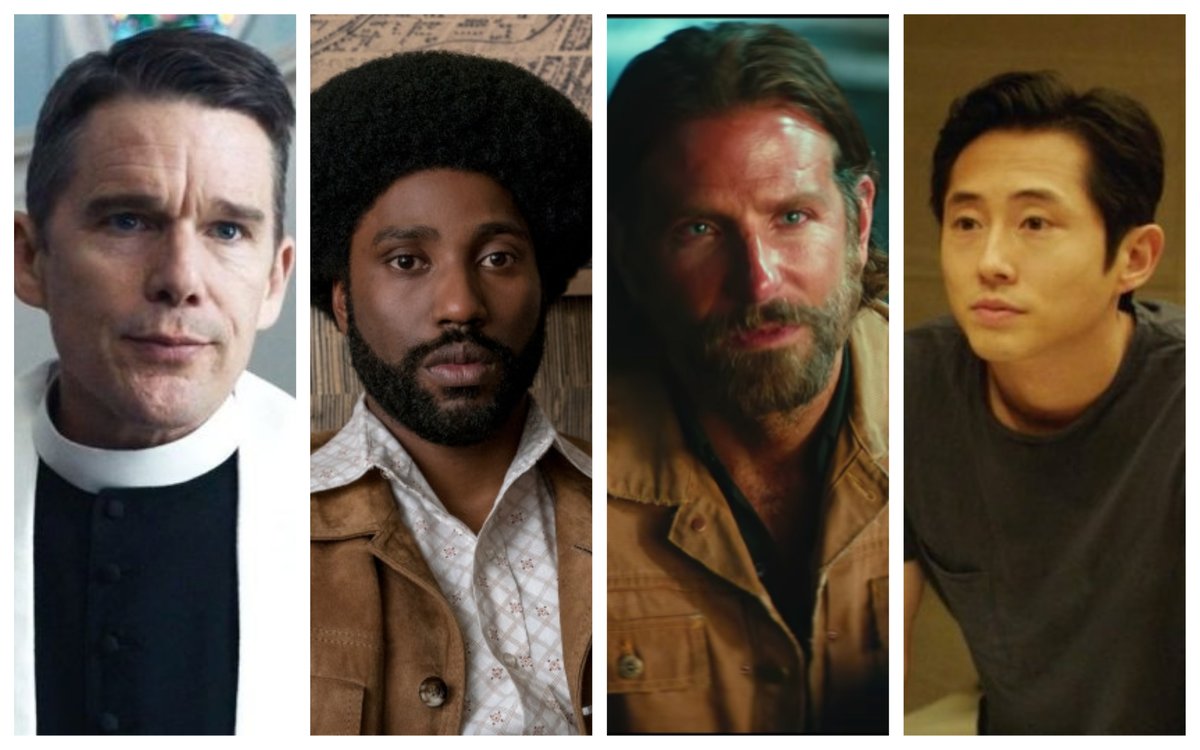
The greatest performances in cinema don't just tell a story; they embed themselves in our collective consciousness, becoming touchstones against which all other acting is measured. These aren't merely well-executed roles; they are profound transformations where actors transcend the script, breathing such vivid life into their characters that they become immortal. We're talking about those rare, magnetic turns that define careers, reshape genres, and spark endless conversations, cementing their place as truly Notable Film Roles & Performances.
At a Glance: What Makes a Performance Unforgettable
- Total Immersion: Actors often dedicate months to research, physical transformation, and even living as their characters.
- Beyond the Script: Iconic lines and mannerisms frequently stem from an actor's improvisation and deep understanding of the role.
- Emotional Resonance: The ability to convey profound human experience, making characters relatable despite extreme circumstances.
- Cultural Impact: These performances often shift public perception, influence future films, and earn critical acclaim, including prestigious awards.
- Minimal Screen Time, Maximum Impact: Some actors have created legends in surprisingly brief appearances.
Beyond the Script: Why Certain Roles Become Legendary
What elevates a performance from "great" to "legendary"? It's more than just raw talent. It's a potent cocktail of dedication, deep psychological understanding, a willingness to push boundaries, and sometimes, a stroke of genius improvisation. When an actor completely inhabits a character, they don't just recite lines; they become the character, imbuing them with a depth and authenticity that makes them feel real, flawed, and utterly human. This fusion of actor and character creates an indelible mark, living rent-free in our minds long after the credits roll.
These portrayals aren't just about technical skill; they're about an actor's courage to explore the darkest corners of humanity or to illuminate its most resilient spirit. They challenge us, provoke us, and sometimes, change the way we see the world.
The Maestros of Transformation: Iconic Portrayals That Defined Eras
The history of cinema is dotted with actors who didn't just play a role but became synonymous with it. From method actors who meticulously crafted every detail to spontaneous geniuses who captured lightning in a bottle, these artists left an indelible mark.
The Method and the Madness: Actors Who Lived Their Roles
Some actors dive so deep into their characters that the line between reality and performance blurs. This immersive approach, often called method acting, yields some of the most profound and authentic portrayals.
- Daniel Day-Lewis as Christy Brown (My Left Foot, 1989)
Day-Lewis is legendary for his intense method acting, and his portrayal of Christy Brown, an Irish writer and painter with cerebral palsy who could only control his left foot, is a prime example. Throughout the production, he famously remained in a wheelchair and communicated only with his left foot. This unwavering commitment earned him his first Academy Award for Best Actor and was widely praised for its sensitive and groundbreaking portrayal of disability, changing public perception. His dedication to understanding Brown's physical and emotional reality was absolute. - Robert De Niro as Travis Bickle (Taxi Driver, 1976)
De Niro's transformation into the troubled Vietnam War veteran turned taxi driver, Travis Bickle, is a masterclass in immersion. To truly embody Bickle's gritty world, De Niro obtained a taxi driver's license and worked shifts in New York City. His iconic, chilling line, "You talkin' to me?" was largely improvised, capturing Bickle's isolated paranoia and descent into vigilantism. Director Martin Scorsese noted that much of Bickle's unsettling inner monologue was a result of De Niro's spontaneous creativity, shaping the film's raw atmosphere. - Denzel Washington as Malcolm X (Malcolm X, 1992)
Denzel Washington's preparation for playing the civil rights leader Malcolm X was exhaustive. He spent months studying Malcolm X's autobiography, speeches, and various footage, striving for an accurate physical and vocal portrayal. His transformation was so complete that even those who knew Malcolm X personally were reportedly astonished by the resemblance and authenticity. Directed by Spike Lee, Washington's performance earned him an Academy Award nomination, lauded for making Malcolm X's complex journey of self-discovery relatable and deeply impactful for a new generation. - Tom Hanks as Chuck Noland (Cast Away, 2000)
In a role that placed immense pressure on a single actor, Tom Hanks delivered a masterclass in isolation as Chuck Noland, a man stranded on a deserted island. His commitment was extraordinary: he lost 50 pounds to depict Noland's physical deterioration and spent months learning survival skills like fire-building and living off the land. With minimal dialogue, Hanks carried the film's entire emotional weight, making his struggle for survival and profound loneliness resonate deeply with audiences worldwide. His dedication ensured the authenticity of Noland's ordeal, making him a true cinematic legend.
Masters of Menace: Villains Who Chilled Us to the Bone
Sometimes, the most memorable performances come from characters we love to hate—villains so compelling they steal the show and linger in our nightmares.
- Heath Ledger as The Joker (The Dark Knight, 2008)
Heath Ledger's posthumous Academy Award-winning portrayal of The Joker wasn't just groundbreaking; it was a disturbing dive into chaotic evil. Ledger famously locked himself away in a hotel room for weeks, meticulously crafting the Joker's voice, unsettling laugh, and erratic mannerisms. He even designed much of the Joker's signature makeup, with scars representing a chaotic past and a personal affront to the world. His complete transformation redefined cinematic villainy, leaving an iconic and haunting legacy. - Anthony Hopkins as Hannibal Lecter (The Silence of the Lambs, 1991)
Anthony Hopkins' chilling yet captivating performance as Hannibal Lecter is legendary, not least because he won the Academy Award for Best Actor despite appearing for a mere 16 minutes on screen. His calm demeanor, unnerving intelligence, and precise delivery created the blueprint for future cinematic villains. One of his most iconic lines, "I ate his liver with some fava beans and a nice chianti," was famously improvised during filming, adding an extra layer of unsettling charisma to a character who became an instant horror icon.
Gravitas and Grace: Commanding Presences
These actors bring an undeniable presence to the screen, whether through quiet intensity, rebellious charm, or profound emotional vulnerability.
- Marlon Brando as Vito Corleone (The Godfather, 1972)
Marlon Brando's portrayal of the aging mafia don, Vito Corleone, is often cited as one of the greatest in film history. Brando's creative choices, from using cotton balls in his mouth to achieve Corleone's iconic muffled speech to reportedly improvising the famous "I'm gonna make him an offer he can't refuse" line, were revolutionary. His performance earned him an Academy Award for Best Actor, which he famously declined as a protest against Hollywood's treatment of Native Americans, adding another layer to his legendary status. - Jack Nicholson as Randle Patrick McMurphy (One Flew Over the Cuckoo’s Nest, 1975)
Jack Nicholson's electric performance as the rebellious patient Randle Patrick McMurphy in a mental institution earned him the Academy Award for Best Actor. Nicholson's natural charisma and improvisational skills were on full display, notably in his unforgettable line, "It's a good day to die." He famously stated his love for the role, as it allowed him to break free from traditional hero archetypes and fully embrace a character brimming with both charm and recklessness, captivating audiences with his untamed spirit. - Meryl Streep as Sophie Zawistowska (Sophie’s Choice, 1982)
Meryl Streep's portrayal of Sophie Zawistowska, a Holocaust survivor burdened by an impossible choice, is a masterclass in emotional depth and linguistic precision. Streep's dedication was unparalleled; she learned Polish for the role and worked with a speech coach to perfect the accent. Her performance, met with universal acclaim, earned her an Academy Award for Best Actress. Streep's deep emotional investment led to intense physical and emotional exhaustion, a testament to her commitment to portraying Sophie's profound suffering and resilience. - Jessica Lange as Frances Farmer (Frances, 1982)
Jessica Lange delivered a career-defining performance as the tragic Hollywood actress Frances Farmer, whose life was marred by mental illness and institutionalization. Lange's commitment to understanding Farmer's emotional complexity was evident in her extensive research, which included delving into Farmer's diaries and personal accounts. This deep dive allowed her to portray Farmer with raw vulnerability and intensity, earning her an Academy Award nomination for Best Actress and cementing her reputation as a powerful dramatic actress.
More Than an Award: The Enduring Impact of Great Acting
While Oscars and critical acclaim often accompany these performances, their true legacy extends far beyond mere accolades. These roles transcend the screen, embedding themselves in our cultural consciousness and shaping how we perceive certain archetypes, historical figures, or human experiences. They can spark important conversations, foster empathy, and even influence real-world change.
For instance, Daniel Day-Lewis's portrayal of Christy Brown not only earned him an Oscar but also shifted public perception of cerebral palsy, encouraging a more sensitive and nuanced understanding of disability. Similarly, Denzel Washington's Malcolm X brought a complex historical figure to life for millions, deepening understanding of the Civil Rights movement. The ability of an actor to inhabit a role so fully that it educates, inspires, or provokes thought is a profound contribution to art and society. Actors like Sergio Peris-Mencheta continue to push boundaries and explore the human condition, reminding us that truly transformative acting remains a vibrant and essential part of storytelling.
The Anatomy of an Immortal Performance: What it Takes
So, what are the ingredients that consistently lead to these unforgettable performances? It's a blend of inherent talent and cultivated craft:
- Dedication & Research: As seen with Denzel Washington and Daniel Day-Lewis, a deep dive into the character's background, history, and physical realities provides an authentic foundation. This isn't just memorizing lines; it's understanding the "why."
- Physicality & Voice: Marlon Brando's cotton balls or Heath Ledger's self-designed makeup and guttural voice show how physical and vocal choices can define a character's essence and presence. These aren't superficial details but intrinsic parts of the persona.
- Improvisation & Spontaneity: The magic often happens when actors are so immersed they can respond authentically and creatively in the moment. De Niro's "You talkin' to me?" or Hopkins' chilling dinner description were unscripted moments that became legendary. This shows a profound understanding of the character's inner workings.
- Emotional Vulnerability: Actors like Meryl Streep and Jessica Lange showcase an incredible ability to tap into deep emotional reservoirs, making their characters' pain, joy, or resilience palpable to the audience. This willingness to expose emotional truth is key to connecting with viewers.
- Understanding the "Why": Beyond the actions, a legendary performance delves into the character's motivations, fears, and desires. This deep psychological insight allows actors to portray complex, often contradictory, human beings with conviction.
Frequently Asked Questions About Legendary Roles
Is an Oscar necessary for a performance to be 'notable'?
While winning an Academy Award certainly elevates a performance's profile and confirms its critical acclaim, it's not the sole determinant of a "notable" role. Many performances that are widely considered iconic or groundbreaking never won an Oscar, or even received a nomination. The true measure of notability often lies in cultural impact, critical consensus over time, and the performance's lasting influence on film and acting.
Does 'method acting' guarantee a great performance?
Method acting, with its emphasis on deep immersion and psychological realism, has certainly led to many of the powerful performances discussed (e.g., Daniel Day-Lewis, Robert De Niro). However, it's a tool, not a guarantee. The effectiveness of method acting depends on the individual actor, the role, and the director. Not all great performances come from method acting, and conversely, not every method performance is universally lauded. Ultimately, the goal is authenticity and impact, which can be achieved through various acting approaches.
How much screen time does an actor need to make an impact?
Anthony Hopkins' Oscar-winning turn as Hannibal Lecter in The Silence of the Lambs—achieved in a mere 16 minutes—is definitive proof that impact isn't measured in screen time. A truly memorable performance can be delivered in a supporting role or even a cameo, provided the actor imbues the character with distinct personality, strong presence, and a clear purpose that resonates with the audience and serves the story. It's about quality and intensity, not quantity.
Your Cinematic Journey Continues: Appreciating the Art of Acting
The journey through these Notable Film Roles & Performances isn't just a nostalgic look back; it's an invitation to deepen your appreciation for the art of acting. Each iconic portrayal is a testament to the transformative power of cinema and the extraordinary talent required to bring a character to life so vividly that they transcend the screen.
These actors, through their dedication, insight, and courage, have given us characters who feel real—characters we root for, fear, mourn, and celebrate. As you watch films, old and new, challenge yourself to look beyond the surface. Observe the subtle choices, the improvisations, the physical transformations, and the emotional vulnerabilities that make a performance truly immortal. For in these moments, we don't just see a character; we experience the enduring magic of human storytelling.